
Start With the Race Distance on the Card
The first check is simple: look at the distance beside the race name and compare it with the horse’s past runs. Many horses have a preferred range, and their best efforts often sit near that mark. A sprinter that is kept to 1000m to 1200m may lose its punch over 1400m, while a stayer that finishes strongly over 1800m can find 1200m too quick.
Do not judge on one run alone. Look for a pattern across several starts and note whether the horse was finishing late, fading early, or never travelling comfortably. In South African racing, the same runner can also behave differently depending on track layout, turning room and the early pace. At Turffontein the climb in the straight can test a horse’s stamina, while a flatter track may let a speed horse hold on longer.
- Check the official distance and compare it with the horse’s recent runs.
- Mark where the horse made its move in those races.
- Note whether it had something left at the finish or was all out early.
Read the Form for Signs of Speed or Stamina
Form reading is not only about finishing positions. Watch for the way the horse races through each section. A runner that jumps well, settles in front and keeps a clean rhythm may be better at shorter trips. A horse that drops out early then keeps finding late may want more ground. If the race was slowly run, a horse can sprint off a sprint pace and still not prove it stays the trip.
Pay attention to margins and race shape. A horse beaten by a long way after pressing hard in a fast early gallop may have gone too quickly. Another that was outpaced but stayed on steadily can be worth following when stepped up in distance. This is where pace maps and sectional thinking help, even for beginners. It is not about guessing, it is about seeing what kind of race suits the runner best.
- Front-runners often need shorter or tactical races.
- Hold-up horses may benefit when moved up in distance.
- Late closers should be watched for signs of a strong finish over 1400m and beyond.
Use Pedigree and Running Style as Extra Clues
Breeding can offer useful hints, though it should never be the only guide. Some horses are built for speed and quick acceleration, while others need time to settle before they do their best work. A compact, sharp mover is often more effective at shorter trips, while a horse that relaxes and lengthens through its stride may improve when asked to go farther.
Running style matters just as much. If a horse pulls hard in the early stages, stepping up in distance may not help unless it learns to settle. If it is slow away and takes time to get into stride, a short sprint can leave it with too much to do. On race day, watch the parade ring and mounting yard where possible. The way a horse walks and carries itself can give small clues, though it should be used with the form only, not instead of it.
- Strong early speed often points to shorter trips.
- Relaxed runners with a strong finish may suit longer races.
- Horses that pull hard may waste energy and fail to see out a trip.
Match the Distance to the Track and Conditions
Distance does not work in isolation. Track condition, rail position and weather all play a part. At coastal venues such as Greyville and Fairview, humidity and softer going can make races feel longer than the number on the card. At Kenilworth or Scottsville, wind and track firmness can also change how a race unfolds. A horse that just gets 1200m on a good surface may struggle when the ground rides more testing.
Think about the day’s pattern. If inside draws are holding and leaders are getting a breather, a speed horse may be even harder to catch over a short trip. If the surface is tiring, a horse with stamina may improve when the race becomes a true test. Always read the track condition notes before deciding. A small change in going can shift a runner from suitable to doubtful very quickly, so keep an eye on scratchings and late changes too.
A Simple Distance Checklist Before You Bet
Use a checklist to keep your judgement disciplined. A horse can appear attractive because of one bright effort, but the distance question must still be answered. Shortlist runners that have already shown they can handle the trip, or those that look likely to improve because the new distance matches their style better. When in doubt, pass the race rather than force a bet.
- Has the horse run well at this distance before?
- Was its last run stronger at the finish or weaker?
- Does the pace setup suit its running style?
- Will today’s track condition help or hinder stamina?
- Is the horse stepping up or dropping back in a way that makes sense?
For betting, keep stakes sensible and only use money you can afford to lose. If you are unsure, ask for a form guide, a pace map note or a racecard shortlist before making a selection.
Race-Day Habits That Help You Judge Distance Better
Distance reading improves when you watch races closely and learn from what you see. On race day, arrive early enough to study the parade, check the going update and listen for any late changes in mood or condition. A horse that looks calm and purposeful before a 1600m race may be better placed than one that is sweating up or wasting energy before the start.
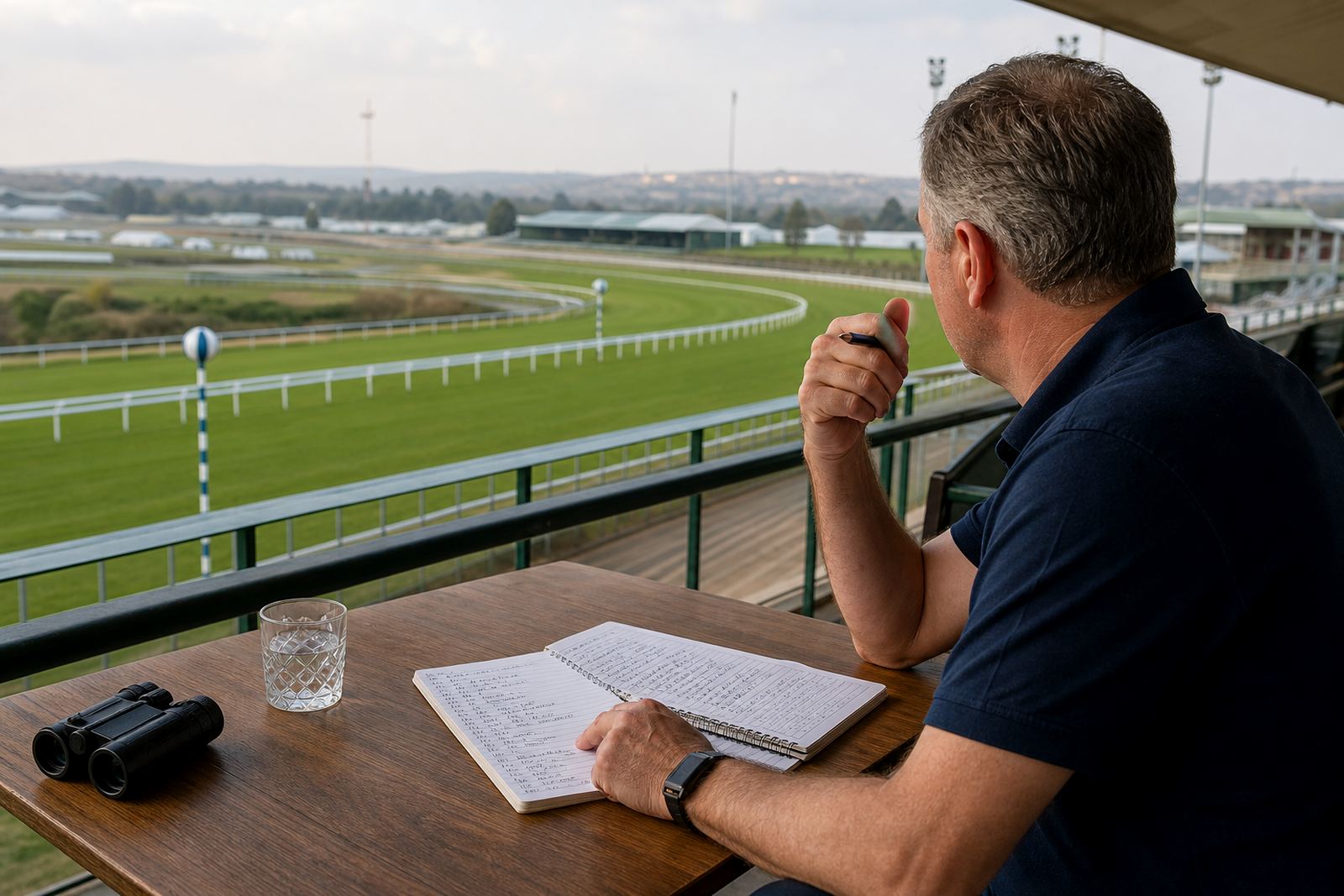
After each meeting, keep a few notes of your own for future reference. Write down whether a horse was caught too far back, whether it went too hard early, and whether the finish suggested more or less ground would suit. Over time, this builds a useful reference for future meetings at Turffontein, Greyville, Kenilworth, Scottsville and Fairview. Small observations add up and can sharpen your view more than any quick glance ever will.