
What You Usually Find at the Track
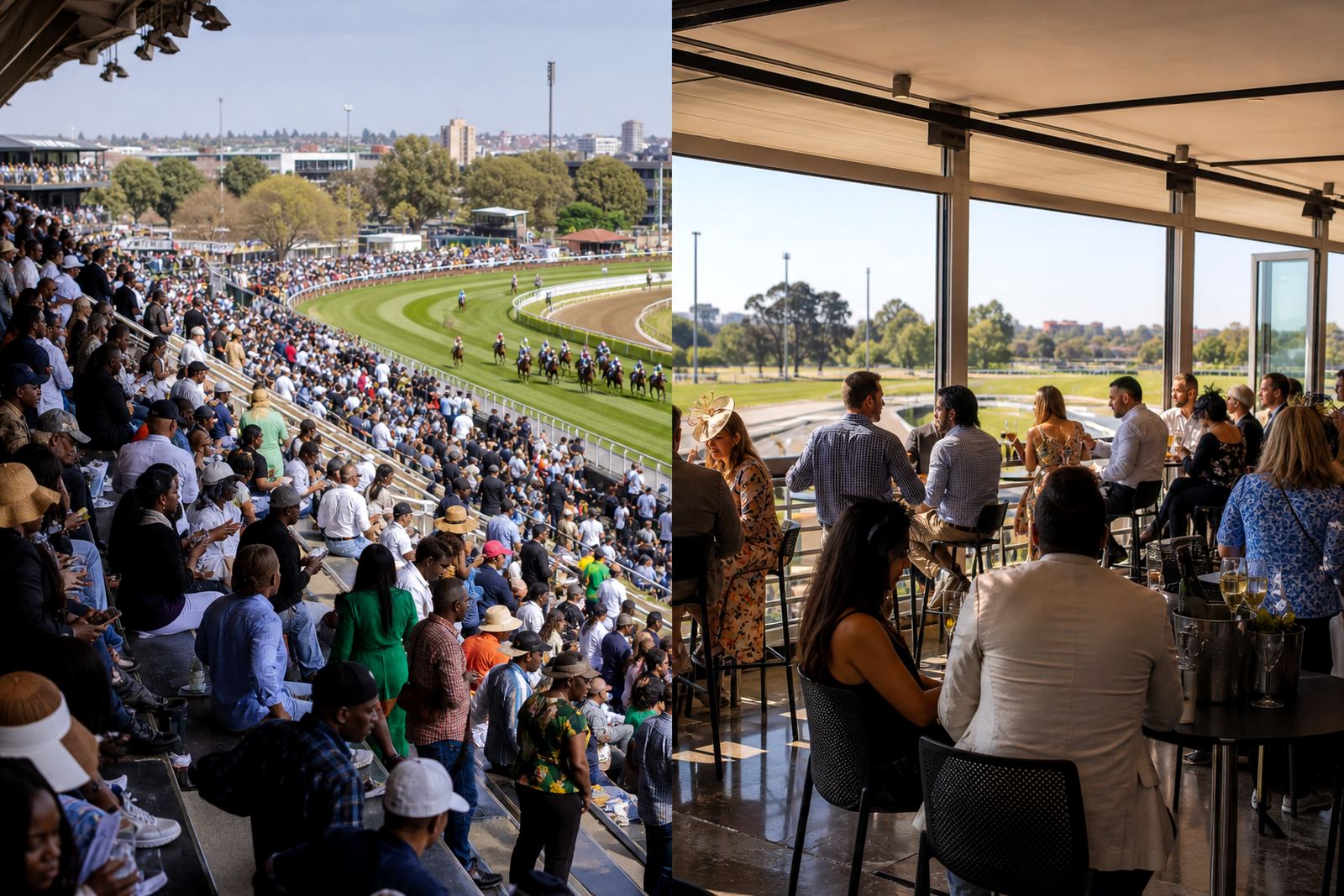
At a racecourse, food is rarely one-size-fits-all. Some areas are built for a quick bite between races, while hospitality spaces are set up for seated meals, table service and a calmer pace. In Johannesburg and at other South African tracks, the range can include snack counters, plated meals, coffee stations and covered dining areas that are better suited to longer afternoons.
If you are going for the first time, it helps to think about the kind of day you want. A casual punter may only need a light lunch, a drink and enough time to read the racecard. A group booking or special occasion often calls for a more structured meal. Either way, the food should fit around the racing, not distract from it.
- Casual counters are best for quick service and shorter breaks
- Restaurants and hospitality suites suit guests who want a seated meal
- Outdoor spaces are more exposed to wind, sun and sudden weather changes
- Popular meetings can mean longer queues, so arrive early
Casual Counters for a Fast, Practical Meal
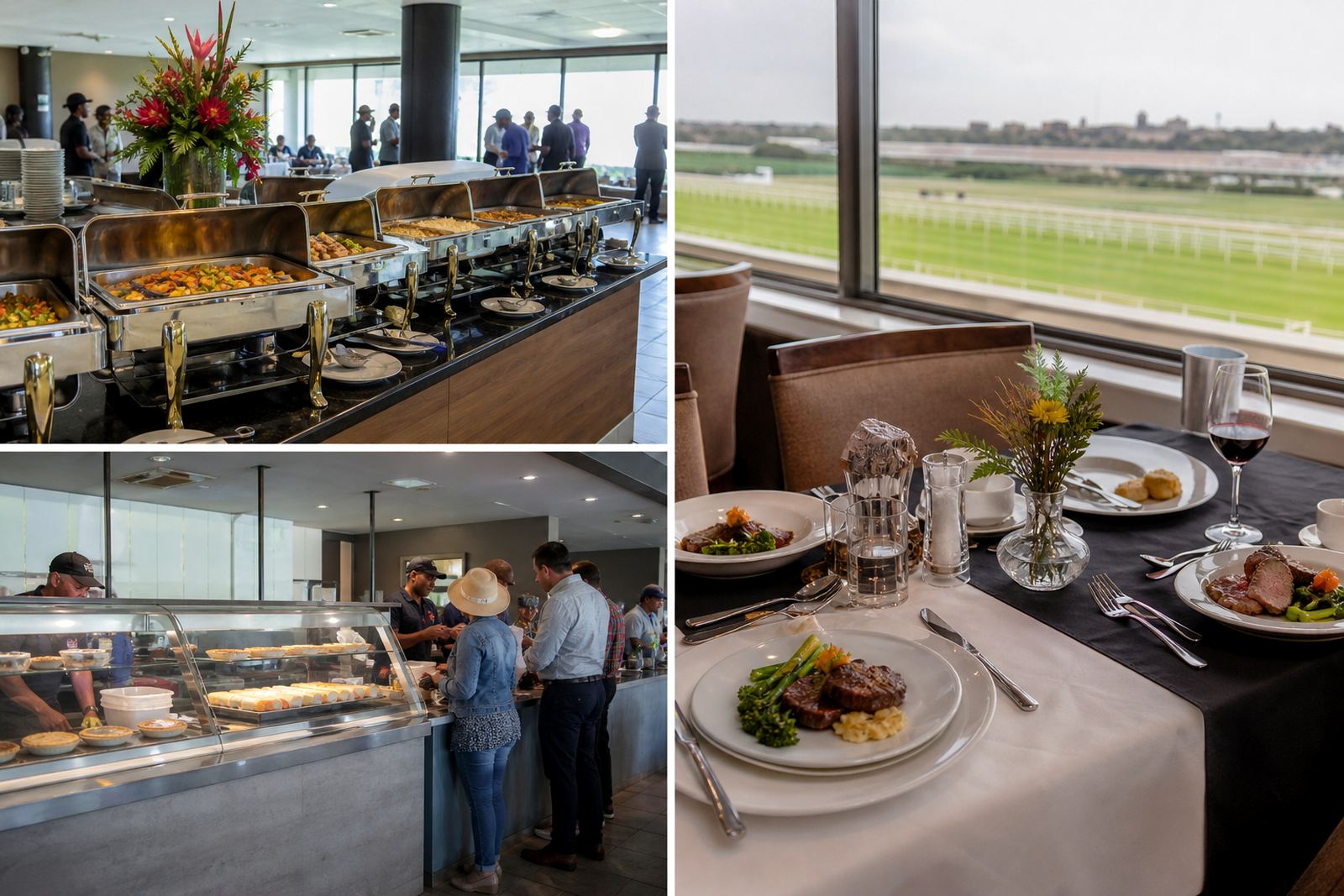
Casual counters are common at race meetings because they are simple, quick and easy to manage. You will usually find light meals, pies, chips, sandwiches, burgers, boerewors rolls or similar snack-style items depending on the venue. These options suit people who want to stay close to the action and do not want to miss a parade, a betting update or the start of the next race.
For families and groups, counter food also works well because everyone can choose separately and get back to the rail without much fuss. The main trade-off is that service can slow down when a big race is about to jump. If you are at Turffontein on a busy Saturday, for example, it is wiser to eat before the peak rush than to join the queue during the last few minutes before a feature race.
Keep an eye on practical details too. Cashless payment is often easier, but it is worth confirming what each stall accepts. On hot days, cold drinks and bottled water are worth prioritising, especially if you plan to stay outdoors for several hours.
Restaurants and Hospitality Catering for a Longer Day
Restaurant-style dining and hospitality catering give you a different rhythm. You get more space, more comfort and usually a more settled dining experience before or between races. These areas are useful for corporate groups, birthday outings and clients who want the day to feel organised from the moment they arrive.
Hospitality catering can range from plated meals to buffet service, depending on the package and the racecourse. The menu may change with the meeting, the number of guests and the time of year. At coastal venues such as Greyville, Kenilworth, Scottsville and Fairview, the venue team also has to consider humidity, wind and local weather when planning service and storage.
Good hospitality is not only about what is on the plate. It is also about timing, seating, access and how smoothly guests move from dining area to race viewing. If you are hosting clients or family, ask how meal service is scheduled around the card so there is enough time to look at the form before the next race.
How to Choose Food Around the Form and the Card
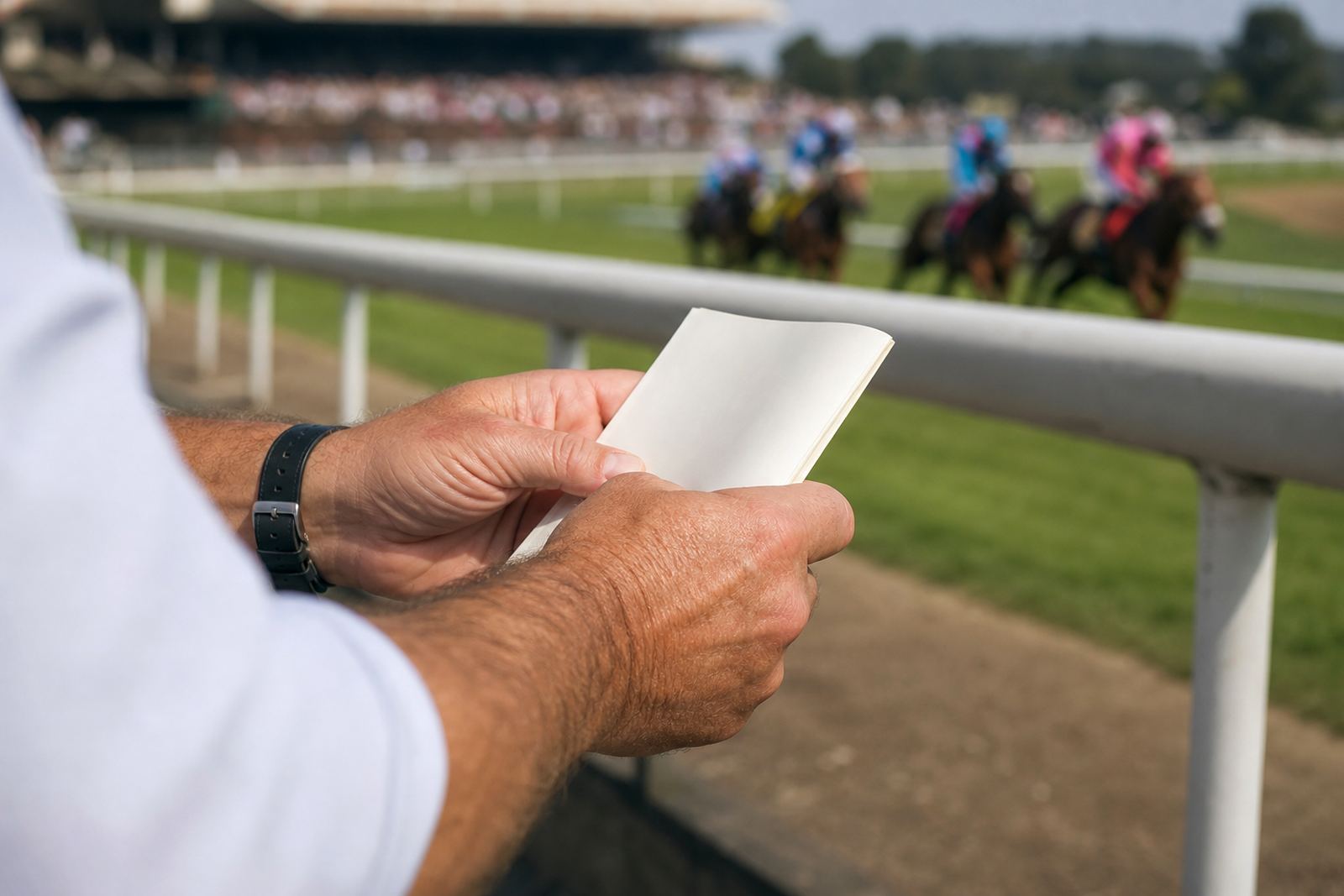
Food choice and race planning go together more than many first-time guests realise. If you want to study the form properly, you need enough time away from the counter to read the racecard, compare pace notes and check track condition comments. A rushed lunch can leave you guessing at the wrong moment.
Racing House often advises adults 18+ to treat the food plan as part of the day’s structure. For a midweek card or a weekend feature meeting, decide early whether you want a quick counter stop or a booked meal. That way you can work your betting decisions around the meal break, not the other way around. Responsible betting matters, so only bet what you can afford to lose and keep the outing enjoyable.
- If you are studying form, choose a quieter seating area where possible
- Check track condition notes before deciding how long you can stay away from the rail
- Use slower periods to review the shortlist and pace map notes
- Do not rely on last-minute food queues if you need to place a bet before the race
Race-Day Etiquette When Eating at the Track
Racecourse dining comes with a few simple courtesies. Keep walkways clear, especially near betting areas and viewing points. If you are carrying food and drinks, move carefully around other guests and avoid blocking the view when the horses are in the parade ring or heading to the start.
Respect for seated areas keeps hospitality spaces workable for staff and guests. If you are not part of a hospitality booking, do not drift into reserved spaces just because a table is open. Staff are usually managing timing, seating and service flow, so a little patience goes a long way. At busy venues such as Greyville or Kenilworth on a feature day, that discipline keeps the whole place moving better.
- Dispose of wrappers, cups and serviettes properly
- Keep noise down in dining areas when the race is on
- Do not leave food unattended on shared tables
- Check with staff before moving seats or taking drinks to the rail
A Johannesburg Example: Lunch at Turffontein Before the Feature Race
Imagine a Saturday at Turffontein with a later feature race. You arrive from Rosebank after a short drive, collect your racecard and decide to eat before the main betting races begin. A counter meal works if you want speed, but if you have brought family or clients, a hospitality booking gives everyone time to settle, talk through the card and review the jockey bookings and track condition notes without rushing.
That is where practical planning matters. Have your meal early, keep your shortlist handy and give yourself enough time to walk to the viewing area before the race. If you are new to the track, ask where the nearest facilities are so you are not searching at the last minute. A good day at the races is usually the one where the food, the form and the timing all fit together.
For guests travelling from Sandton, Midrand, Randburg, Bedfordview, Pretoria, Centurion or Kempton Park, that same approach works across the region. Eat with the card in mind, not just with your appetite in mind, and the day tends to feel calmer.
Booking the Right Food Experience
The right food option depends on your group size, your budget and the meeting itself. A small group may be happy with a quick counter stop and a few drinks, while a hospitality package suits corporate guests, birthdays and race-day outings where comfort matters as much as the racing. If you are unsure, ask what is included before you commit. That can save confusion over seating, service times and access on the day.
Racing House helps adults 18+ plan race-day hospitality with the practical side in mind. Clients reach us through the enquiry form on our contact page, and we can talk through the meeting, the type of food service, the racecourse and how the day should run. Whether the venue is in Johannesburg or at another South African racecourse, the aim is the same: a well-run day with enough time to enjoy the racing.
Food will not pick a winner for you, and no tip should be treated as a certainty. Use the card, use the conditions and keep betting sensible.