
Start with recent runs, not just the last result
When you study a racecard, begin with the last three to five runs. A horse that has been running regularly is often easier to assess than one coming back after a long break, because you can see current form, race fitness and whether it is holding condition. A poor finishing position does not always mean the horse is unfit. It may have met stronger opposition, raced over the wrong trip, or had trouble in running.
Look for the shape of the runs. Is the horse improving with each outing, flattening out late, or finding excuses? At Johannesburg meetings and coastal tracks alike, recent runs tell you whether the horse is still tightening up or already near peak condition.
- Check the finishing positions and the margins behind the winner.
- Note whether the horse finished strongly or was weakening late.
- Compare today’s trip with the distances of the recent runs.
- Watch for quick back-up runs versus long gaps between runs.
Use spell lengths to judge freshness and readiness
A spell is the time between runs, and it matters. A short break can help a horse recover and sharpen up, while a very long break can mean it needs a run or two to get race fit. Some horses fire fresh, especially when the stable has them ready, but many improve only after one outing. That is why spell length should be weighed together with the trainer’s pattern and the horse’s recent work.
On a practical level, ask whether the horse is returning after 3 to 6 weeks, 2 to 3 months, or longer. The longer the gap, the more you should look for signs that the horse has been prepared properly. In South African racing, a horse returning from a spell may still run well first up, but you should not assume it will be fully tuned unless the form supports that view.
- Short spell: often indicates maintenance fitness.
- Moderate spell: can point to a freshen-up or minor issue.
- Long spell: needs extra scrutiny, especially in tougher races.
- First run after a break: check if the horse tends to improve second up.
Read the racecard for fitness clues
A racecard gives more than names and numbers. Use it to build a fitness picture. Form figures show consistency, but the comments, class drop, distance change and weight shift can matter just as much. A horse dropping in class after several honest efforts may be fit enough to be competitive, while one stepping up sharply after a quiet prep may still be short of its best.
Form reading becomes easier when you link fitness to the race conditions. A horse that has raced at 1200 metres and now goes to 1400 metres may settle better if it has been finishing off its races. Another horse may be returning to a preferred distance after a break, which can help mask slight lack of fitness. Use the page, not only the finishing order, to make sense of the move.
For punters 18+, this is where careful betting starts. If the fitness picture is unclear, keep your stake modest or pass the race. Responsible betting means treating uncertainty as a warning sign, not a challenge to chase.
Watch for track condition and pace effects on fitness
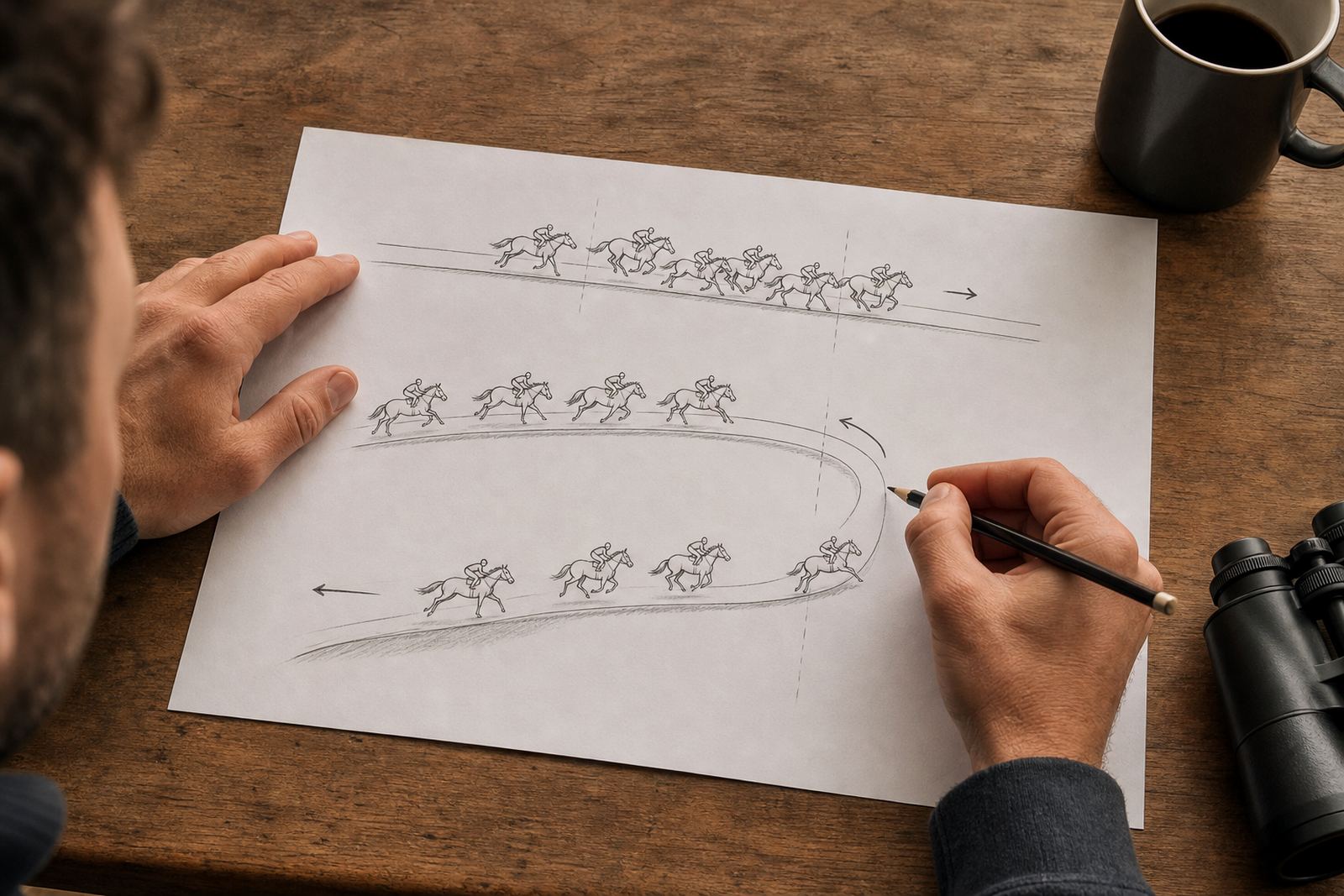
Fitness is not judged in a vacuum. A horse can look fully ready on paper but struggle if the ground is too firm, too wet, or if the early pace is far stronger than it has handled before. At Greyville and Kenilworth, moisture, wind and surface conditions can alter how a race is run. At Turffontein, a strong tempo can expose horses that are not fully wound up. At Fairview and Scottsville, the shape of the track and pace position can also make a big difference.
Track condition notes should sit beside fitness notes. A horse with two steady recent runs may be fitter than one with a flashy trial but no pressure race. Likewise, a horse who has been finishing well against slow early fractions may need more stamina if today’s pace is likely to be genuine.
- Check whether recent runs were on similar going.
- Note if the horse has handled wet tracks or firm ground before.
- Look at pace map notes to see if the race is likely to suit.
- Consider whether the horse is being asked to settle, lead, or finish hard.
Spot the difference between a prep run and peak effort
Some runs are intended to build fitness rather than win. The horse may travel comfortably, then not be fully extended late. Other times it is asked for a more serious effort and you can see that in the way it quickens, responds under pressure, or fights on to the line. Learning this difference is one of the quickest ways to improve your form reading.
A prep run usually shows a horse that is still a little flat, or one that finishes without that last bit of punch. A peak effort tends to show stronger sectionals, better race position and a more determined finish. One run can change the picture completely, so do not overvalue a single result without asking how hard the horse was really asked to go.
Use a simple fitness checklist before you bet
Before placing a bet, run through a short checklist. This keeps the focus on facts instead of hope. It also helps novice punters get used to measuring fitness the same way each time.
- Has the horse run recently enough to be race fit?
- Is the spell short, moderate, or long?
- Did the last run show improvement, stability, or regression?
- Is today’s distance a better fit than before?
- Will the track condition suit the horse’s recent profile?
- Does the likely pace help or hinder this runner?
- Is there a first-up pattern, or does the horse usually need a run?
If several answers point the right way, the horse may be ready to run its race. If the answers are mixed, keep the bet smaller or leave the race alone. That is part of sound betting discipline.
Race-day etiquette for hospitality guests and track visitors
Fitness guide thinking also helps on race day because the parade ring and pre-race atmosphere can confirm what the form has suggested. A horse carrying condition well, moving freely and behaving calmly is easier to trust than one that looks uncomfortable or over-excited. Keep your viewing respectful and let the horse, the trainer and the jockey do their work.
At hospitality events, arrive on time, keep to the venue rules, and remember that betting is only one part of the day. Enjoy the food, the racecards and the company, but do not push for action on every race. Responsible betting for adults 18+ means setting a limit, staying within it and avoiding impulsive bets after a narrow loss.
Racing House provides race-day hospitality and form support for meetings at Turffontein, Greyville, Kenilworth, Scottsville and Fairview, with service for clients in Rosebank, Sandton, Midrand, Randburg, Bedfordview, Pretoria, Centurion and Kempton Park. Use the enquiry form on the contact page if you would like help planning a race day or understanding a card more clearly.