
Why racing language matters before you place a bet
Race-day talk is not just jargon. It tells you how a horse has been running, what kind of test it faces today, and how to read a racecard without guessing. When you understand the shorthand, you can compare runners more calmly and avoid getting carried away by one flashy result or one bad run.
For adults 18+ who are betting, this matters because the first skill is not picking a winner, it is understanding the race. A simple note such as a horse being better over 1 600 metres, or needing softer ground, can change how you view the whole field. That is where proper form reading starts.
The form line terms you will see most often
A racecard usually shows recent runs, finishing positions, distance, track, and sometimes a comment on the run. Once you know the basics, the line starts to make sense. A horse that has been finishing close up in stronger races may be more interesting than one that won a weak event on a perfect day.
- Form means the horse’s recent performances.
- Distance suited means the trip today should suit the horse better than a shorter or longer race.
- Draw is the starting position in the barriers, which can matter at some tracks and distances.
- Going describes the track condition, such as firm, good or soft.
- Class refers to the quality level of the race compared with others.
- Step up or drop back means moving to a longer or shorter distance.
If a horse has run well over 1 800 metres but now tackles 2 000 metres, you would ask whether the extra trip helps or exposes stamina limits. That is the sort of question our form notes help answer.
Racecard shorthand explained in plain language
Racecards often use short comments and symbols to save space. They are useful, but only if you know what they are telling you. A horse described as a front-runner may prefer to be near the pace, while a hold-up runner usually finishes late and needs things to fall its way.
At Turffontein, for example, the early pace can matter a lot in some races because the field has to position itself quickly. If a race has several runners who like to lead, the speed can become strong and that may help a horse coming from off the pace. That is why pace map notes are worth reading alongside the basic form.
- Pace is how fast the race is likely to be run.
- Barrier trial or workout form can suggest fitness, but it is not the same as race performance.
- First run after a break means the horse is returning after time off and may need the outing.
- Weighted up means the horse carries more weight than before, usually after a good run.
- Meeting is the full race day card, not just one race.
How to read a race without overcomplicating it
The best way to read a race is to keep it simple. Start with distance, track condition, draw, recent form and pace. Then ask whether today looks easier or harder than the horse’s last few runs. That approach is more useful than trying to find a magic angle.
For a midweek card at Greyville, for instance, the surface and weather can shape the race differently from Johannesburg. Coastal humidity, rain or changing track conditions can influence how the race unfolds, so track condition notes are worth checking carefully. A horse that handles a soft track may be far more appealing on a wet Durban day than one that prefers a quicker surface.
Keep one practical rule in mind: recent placing alone does not tell the whole story. A horse may have finished sixth but raced wide from a bad draw, or faced a stronger field than today. Context matters more than a single number on its own.
Hospitality and race-day etiquette at South African tracks
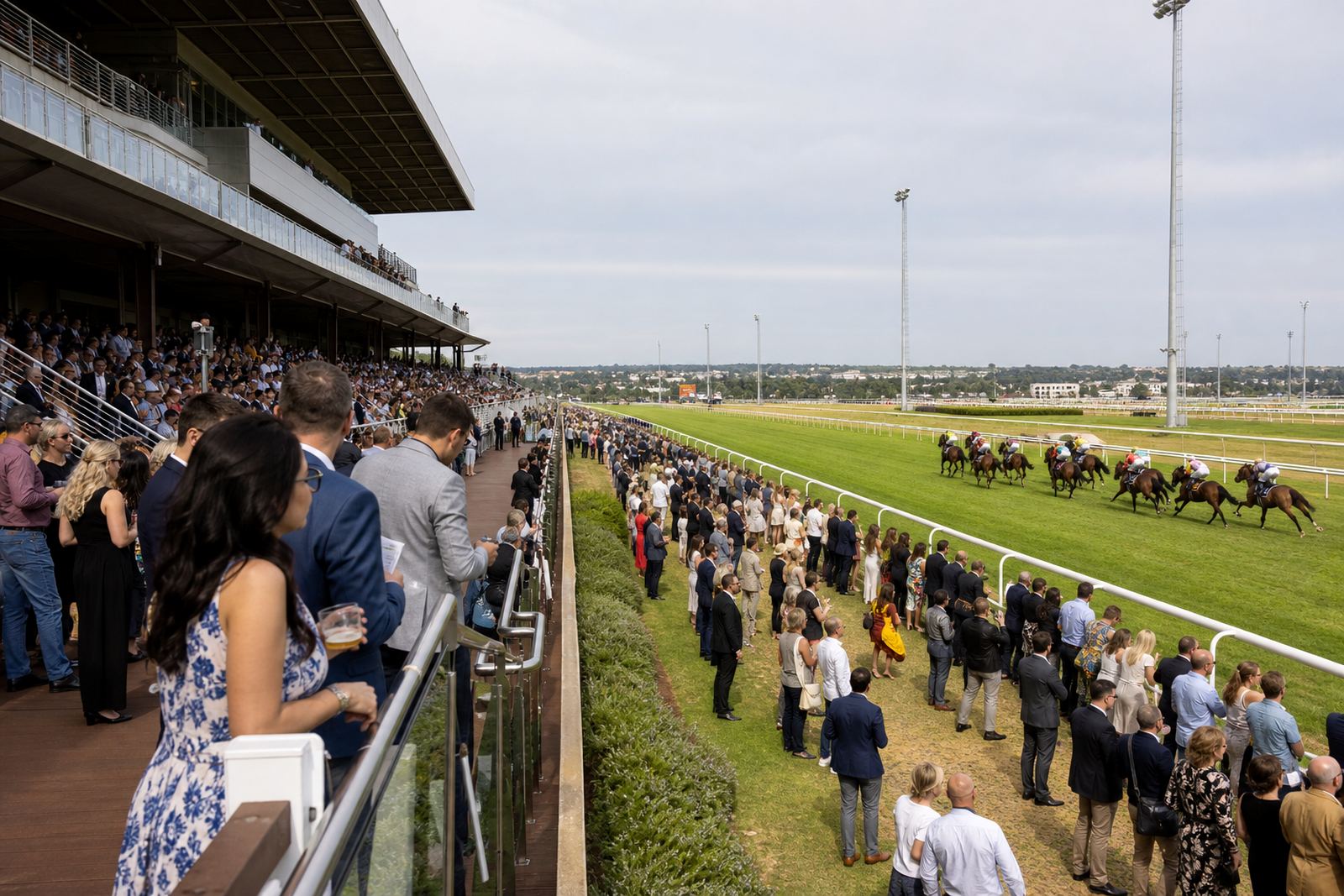
Whether you are at Kenilworth, Scottsville, Fairview or a Johannesburg meeting, race-day manners help everyone enjoy the day. Hospitality packages are meant to make the outing more comfortable, but the same basic etiquette still applies. Arrive on time, check the race programme, and keep your place tidy.
If you are joining one of our race-day hospitality packages, it helps to know the rhythm of the afternoon. There is time to study the card, time to watch the horses in the parade ring, and time to settle before each race. Good etiquette is simple: avoid blocking other guests’ view, keep noise down near the officials and respect staff instructions, especially in busy areas.
- Keep your racecard handy and note the race number before heading to the ring.
- Stand clear of walkways when runners are being led past.
- Do not crowd the betting areas or the parade ring rail.
- Check the weather and dress for the day, especially in summer heat or winter wind.
- Be considerate when discussing bets, because many guests are there for a calm outing.
Local example: a novice punter in Johannesburg
Say a first-time guest in Rosebank is looking at a Saturday card from Turffontein. They do not need to know everything at once. They only need to ask a few clear questions: Has the horse shown useful form? Does the distance suit? Is the draw fair? Will the track condition help or hinder? Is there likely to be strong early pace?
That same method works whether you are in Sandton, Midrand, Bedfordview or Pretoria. It also fits our services well, from Daily Tip Notes and Weekend Preview Service to Novice Punters Help, Racecard Shortlist and Track Condition Notes. The goal is not noise, but clarity you can use when you study the card.
If you are betting, keep it measured and set your own limit before the first race. Responsible betting means treating it as entertainment, not income. If you feel you are losing control, step back and get support early.
A short glossary to keep in your pocket
Some words appear again and again in racing coverage, form guides and trackside conversation. If you remember just a few, you will feel much more at home.
- Odds are the price offered on a runner.
- Favourite is the runner expected to attract the most support.
- Outsider is a less fancied runner.
- Exacta, trifecta and similar terms describe placing combinations, depending on the bet type.
- Scratch means a runner has been withdrawn.
- Weight-for-age is a race where horses carry set weights based on age and sex conditions.
Once these terms become familiar, the rest of the card becomes easier to follow. You do not need to memorise everything in one day. Start with the race you are studying, read the form line slowly, and build from there.