
Use Tips As A Starting Point, Not The Final Answer
Outside opinions can save time, especially on a busy Saturday when several meetings are on the card and you only have a short window to study. A tip note can point you towards a horse with the right profile, a race where the pace may suit, or a runner that looks better than the market suggests. But tips are strongest when they lead you back to the form book, not when they replace it.
The best punters ask simple questions before they get involved. Is the horse fit enough? Does it handle the trip? Is the draw useful? Has the runner shown enough at this course, or on a similar surface, to be trusted again? If the answer is unclear, it is often better to stand back than to force a bet.
How To Read Form Without Overcomplicating It
Form reading does not need to be technical jargon. Start with the basics: finishing positions, margins, class, distance, going and pace. A horse that ran third in a stronger race may be more interesting than one that won weakly in a small field. A runner stepping up in trip may improve, but only if the style of racing suggests it will settle properly. That is where your own study matters.
- Check recent runs first, then look back for patterns.
- Compare today’s race class with the horse’s last few starts.
- Note whether the horse likes firm ground, softer going or a wet track.
- Watch for pace clues. A leader in a slowly run race may not get the same easy rhythm again.
- Take any first time gear changes into account, but do not treat them as magic.
At Turffontein, for example, a race over a staying trip can play very differently from a sprint. A horse that finishes well when the pace is honest may struggle if the tempo drops and the dash begins late. That small detail can make the difference between a sound selection and a guess.
What To Keep An Eye On At South African Racecourses
Local conditions matter. Greyville on a humid coastal afternoon is not the same as a dry midweek card in Johannesburg. Kenilworth can reward horses that travel well and quicken off a sensible gallop, while Scottsville’s layout and pace shape can ask different questions again. Fairview may bring a different rhythm entirely depending on the surface and weather. If rain has fallen or the wind has picked up, do not ignore it.
When studying a card, think in practical terms:
- Track condition and how it may change through the day.
- Barrier draws and whether they help or hinder early position.
- Whether the field contains several front-runners or only one likely leader.
- The horse’s recent travel, recovery and consistency between runs.
- Any stable or rider patterns that are relevant to the meeting.
For racegoers in Rosebank, Sandton, Midrand, Randburg, Bedfordview, Pretoria, Centurion and Kempton Park, this is the same discipline whether you are heading to a local viewing venue or travelling through to a feature meeting. Good form study travels with you.
A Local Example From A Johannesburg Meeting
Take a Saturday feature at Turffontein. Two runners may look close on paper, but the better selection might depend on simple context rather than a loud opinion from the crowd. One horse could have strong late sectionals in a race that was run at a crawl, while another may have faced a tougher tempo and still kept on. Your own study helps you see which performance is more reliable.
If a tipster leans one way and your notes point another way, ask why. Maybe the horse you prefer has been more consistent over the trip, or maybe the race shape suggests it will enjoy a more honest gallop. Maybe the other runner is better suited to the conditions but has a bad draw. That is the sort of check that keeps betting disciplined.
Our Daily Tip Notes, Weekend Preview Service, Midweek Briefing and Racecard Shortlist are designed to support that process. The value is in the conversation between the guide and the form, not in taking any opinion on trust alone.
Race-Day Etiquette Helps You Think More Clearly
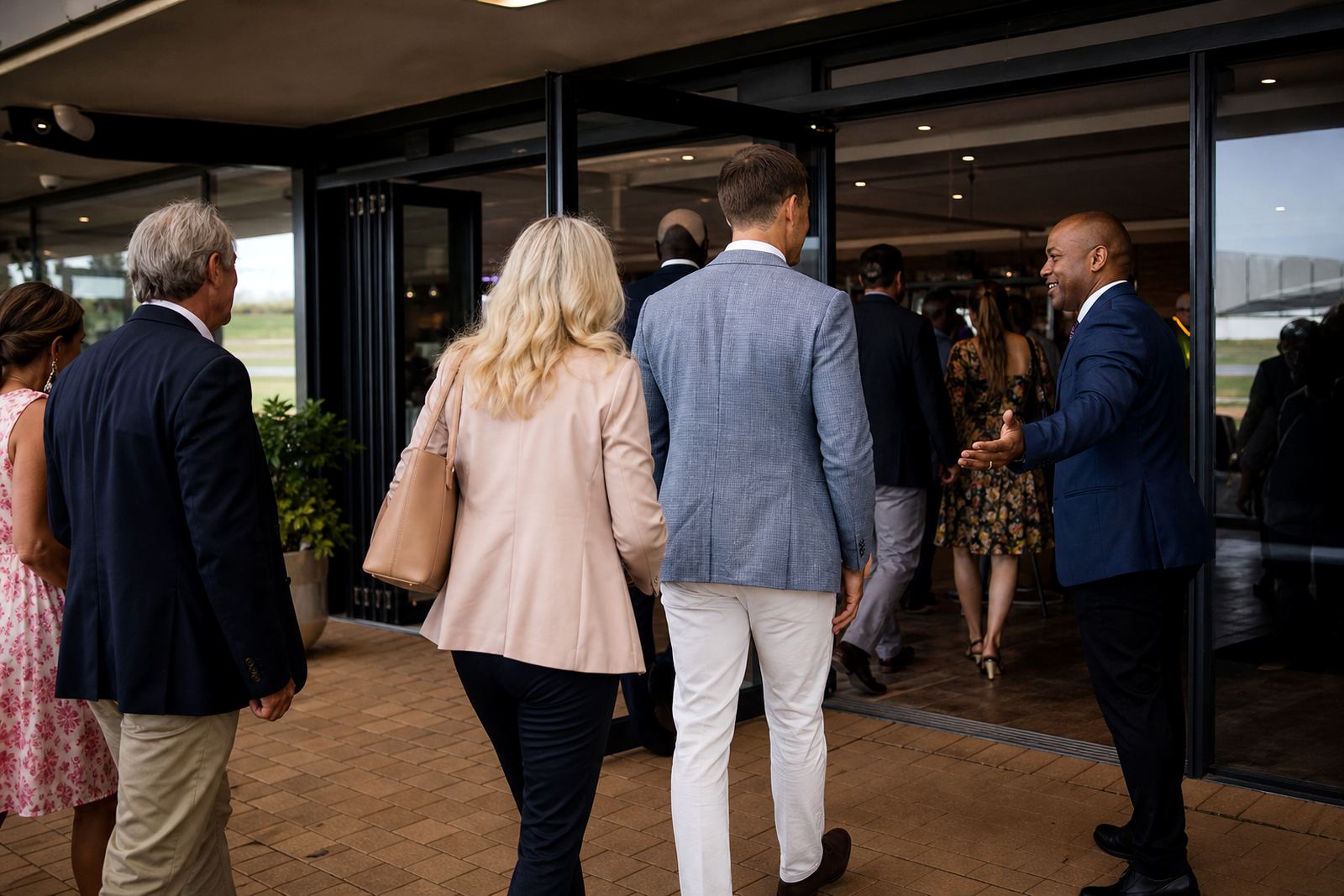
Good race-day behaviour is part of good judgement. If you are heading to a racecourse hospitality area, keep your group moving neatly, respect seating allocations, and allow staff to do their work without pressure. At the rails or around the ring, avoid crowding others when they are trying to read the card, and keep noise down when someone is studying late market moves or track updates.
Getting there early gives you time to settle in and watch the parade ring properly. Some look relaxed and on task, while others sweat up or become unsettled. That visual cue should not override form, but it can confirm what you already expected.
- Give yourself time to review the card before the first race.
- Do not chase late opinions without checking the basics.
- Keep your bet size sensible and set a limit in advance.
- Use your own notes so you remember what actually influenced the decision.
Hospitality, Study And The Social Side Of Racing
Racing is more enjoyable when the day is organised properly. Our race-day hospitality packages are planned to help adult guests enjoy the meeting without rushing around between the bar, the tote area and the parade ring. From Rosebank in Johannesburg, our team supports racegoers heading to Turffontein, Greyville, Kenilworth, Scottsville and Fairview with practical meeting information and hospitality guidance.
Mamello Mabandla oversees hospitality arrangements, while Gert Vosloo works on form analysis and Zainab Arendse manages client communication through the enquiry form. Nyiko Mnguni coordinates race day timing, Kubashni Gounden handles content detail, and Ruan Steenkamp looks after operations. Under Mfundo Ngqula’s leadership, the focus stays on clear information and good service, not noise for its own sake.
Whether you need Track Condition Notes, Pace Map Notes, Meeting Recap Notes or Novice Punters Help, the aim is the same: give you enough structure to make your own call with confidence and restraint.
Know When To Stand Aside
One of the most useful betting skills is knowing when a race is too open, too short on value or simply not clear enough. If your study does not give you a strong view, there is no need to force a play. Sitting out a race is still a decision, and often a smart one. The market will always present another opportunity.
For adults who do choose to bet, responsible play matters. Set a budget, stick to it and never chase losses. If betting stops being fun or starts affecting your mood, pause and get help early. Racing should remain a day out, a study exercise and a social interest, not a financial plan.
That balance between tips and own study is what keeps racegoers grounded. Use the insight, trust your process, and let the card tell you when to go in and when to wait.