
Hot Days Can Drain Energy Before The First Race
Heat is often the first thing punters notice at a racecourse, especially in Johannesburg where a bright winter day can still warm up quickly by midday. On hotter afternoons, standing for long periods between races can leave people tired, thirsty and less patient when studying the form. That is when small mistakes creep in, like rushing a bet or missing the late parade because you are looking for shade.
When the forecast is warm, choose light clothing that still looks neat for the members areas. Breathable shirts, comfortable shoes and a cap or hat help more than people think. Sunscreen matters too, even in places that feel dry. If you are bringing the family or meeting friends, it helps to plan where you will sit, where the nearest water point is and whether you will be moving between the grandstand, betting areas and hospitality spaces.
- Carry a refillable water bottle if the course allows it.
- Use lighter colours that stay cooler in direct sun.
- Keep race cards, notes and your phone in a dry pouch if there is any chance of sweat or drizzle.
- Give yourself more time between races so you can study the field properly.
Wind Changes The Way A Track Feels And Plays
Wind is easy to ignore before the first race, then it becomes the thing everyone talks about between runs. At places like Turffontein, Greyville, Kenilworth, Scottsville and Fairview, a strong wind can make a day feel colder than expected, and it can also affect how horses travel in the race. On the day itself, wind can move dust, push rain sideways and make open seating less comfortable than expected.
From a form point of view, wind is worth noting because it may alter how early speed is used. Horses that race up with the pace can be exposed if the headwind is strong in the straight, while others that settle may get a smoother run. You do not need to overcomplicate it, but it helps to check track condition notes and listen for any change in how the going is described after the first few races.
- Bring a light jacket even if the morning starts warm.
- Choose shoes that stay steady on uneven or wet concrete.
- Hold on to loose papers, racecards and caps in gusty areas.
- If you are in hospitality, ask where the sheltered viewing points are before the first race.
Rainy Race Days Need Better Timing And Better Shoes
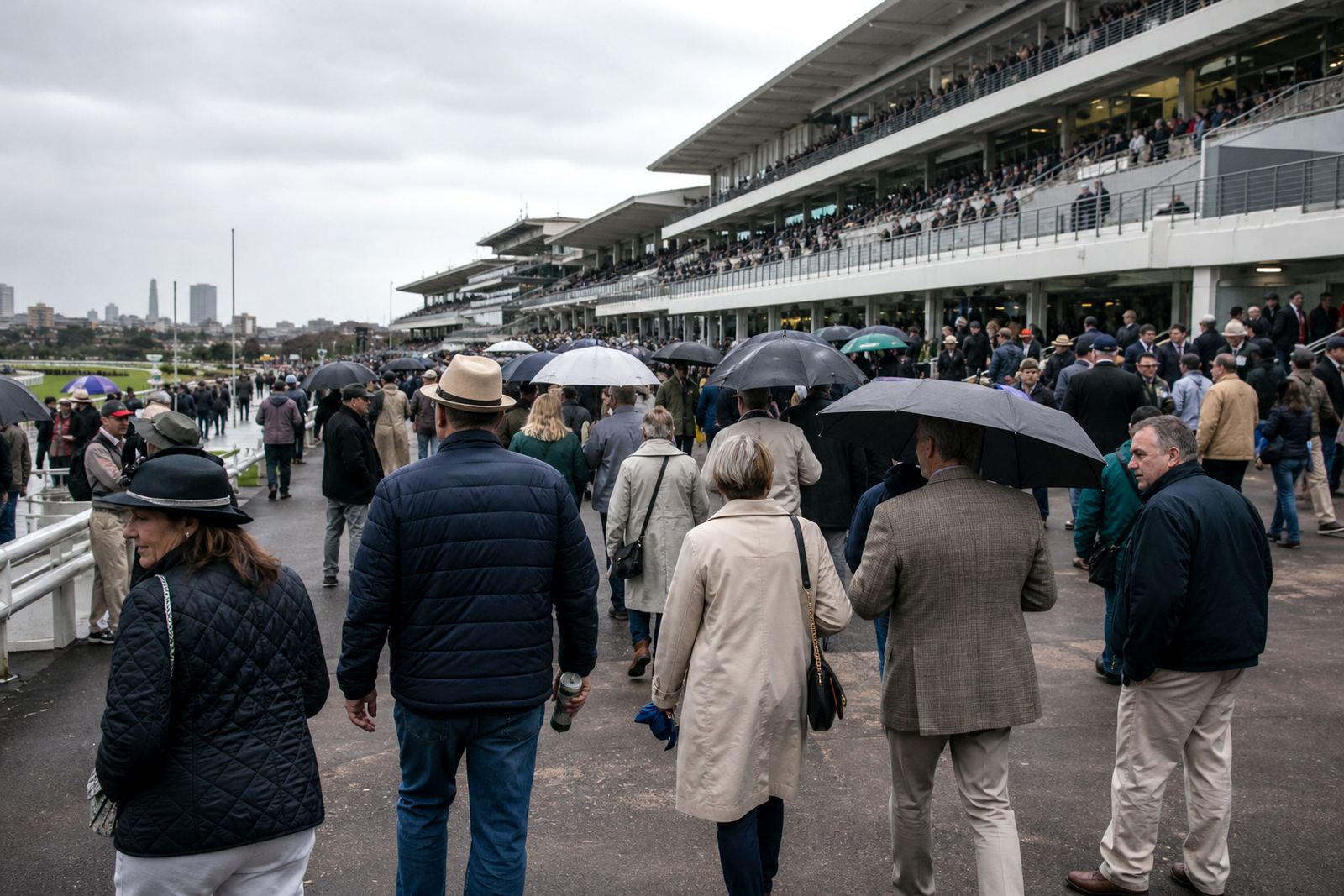
Rain changes everything from parking to where you stand while waiting for the next race. At coastal venues the rain can arrive with humidity, and at inland tracks it may come as a brief but heavy shower that leaves pathways slippery. Good race-day planning starts with footwear. If your shoes are not suitable for wet ground, you will spend the day worrying about every step instead of enjoying the card.
Rain also changes the form picture. On softer ground, some horses handle the surface better than others, and that is where track condition notes become useful. A race card may look straightforward on paper, then the rain arrives and the meeting becomes more tactical. For that reason, many racegoers prefer to wait until close to the time before finalising their view. It is sensible, not nervous. It' simply part of reading the day properly.
- Keep a compact rain jacket or poncho in your bag.
- Protect phones, tickets and notes in a sealed pouch.
- Check whether open-air hospitality areas have covered sections.
- Allow extra time for traffic and parking when rain is heavy.
What To Wear From Turffontein To Greyville
South African race days are not all the same. Johannesburg can feel dry and bright, while Durban can be warmer and more humid, and Cape Town may start with a chilly breeze before the sun breaks through. That means clothing should match the venue, the season and how much walking you expect to do. A smart outfit does not have to be formal or uncomfortable. It should work for the weather and for the venue rules.
If you are heading to a major meeting, think in layers. A shirt or blouse, a light jersey, and a jacket you can fold away will cover most conditions. For hospitality packages, neat casual clothing usually works best, but it is still worth checking the dress expectations for the area you booked. In summer, lighter fabrics are easier. In winter, a windproof outer layer is worth more than an extra thin top that offers little protection.
- Layer clothing so you can adapt when the temperature changes after sunset.
- Choose practical footwear for steps, grass and polished floors.
- Avoid bulky bags if you will be moving between betting windows and seating areas.
- Bring a small umbrella, but use it carefully so you do not block the view of others.
How Weather Affects Form Reading On The Day
Weather should never replace proper form study, but it can sharpen your view. A horse with strong early pace may look more attractive on a dry track with little wind, while another may suit a softer surface after rain. The key is to use weather as one more layer of information, not the only reason to back or oppose a runner. That is where a clear racecard shortlist and pace map notes can help.
If you are a novice punter, start with the basics: current track condition, recent form, draw, running style and whether the horse has handled similar going before. If you are more experienced, add the local conditions as the day unfolds. A meeting can change after a shower, a gusty afternoon or a cooler evening. Good race reading is about adjusting without chasing every change. Responsible betting means staying within your budget and never treating racing as a way to solve money pressure.
- Check the latest going update before placing any bet.
- Watch the first races for clues on how the track is riding.
- Use fixed staking that suits your budget.
- Take breaks if the weather or the crowd makes it hard to concentrate.
Hospitality Planning For Clients, Friends And Corporate Days
Weather matters just as much for hospitality as it does for betting. A wet or windy afternoon can affect arrival times, meal service, shaded seating and how long guests want to remain outdoors. That is why race-day hospitality works best when the details are handled early. Knowing whether the area is fully covered, semi-open or exposed to the elements helps everyone arrive dressed properly and with realistic expectations.
For groups in Rosebank, Sandton, Midrand, Randburg, Bedfordview, Pretoria, Centurion and Kempton Park, the journey to the course is part of the day too. Traffic, parking and weather can all affect timing. If you are hosting clients or friends, build in a buffer so nobody arrives flustered. When the afternoon is well planned, the racing feels better, the conversation flows easier and the form guide becomes part of the experience rather than a chore.
Racing House supports race-day planning with form guides, track condition notes, pace map notes and hospitality tip briefs for South African racecourses. For betting advice, always use your own judgement, stay responsible and only wager what you can afford to lose.